



When a Leak Hits the Internet
Not long ago, drone footage of an offshore oil rig leak went viral. The clip showed a thick ribbon of crude slicing through the water like a scar, drifting miles from the platform. Within hours, news outlets picked it up. Environmental groups shared the video across social channels. The rig operator stayed silent for days, only acknowledging the incident after satellite images confirmed the spread.
These moments are becoming more common. What used to be quiet disasters now unfold in real time, captured by drones, crew members, or passing ships. The public sees every sheen, every plume, and every failure. That visibility forces a new kind of accountability—one that outdated systems can’t handle.
The Problem Beneath the Platform
Containment on oil rigs is a challenge. You’ve got exposure to saltwater, corrosion, mechanical movement, and weather that changes by the hour. Equipment wears down fast, and makeshift repairs don’t last. When containment fails offshore, cleanup becomes exponentially harder, especially with wave action pushing oil into open water.
More operators now realize that traditional liners and steel barriers can’t meet the demands. Instead, many are turning to more flexible, durable materials—especially for deck coatings, tank bases, and below-equipment pads. That’s where oil containment using polyurea enters the picture.
Why Polyurea Is Changing the Game
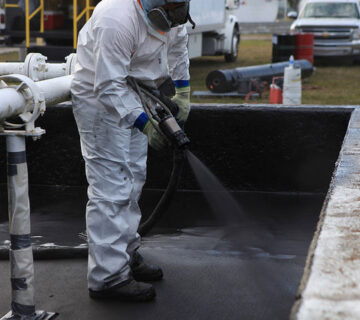
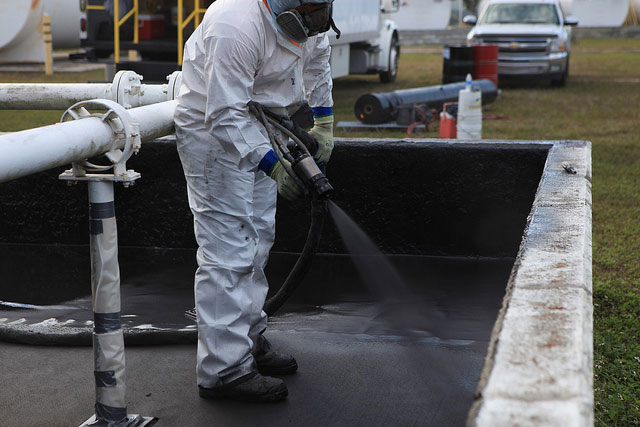
Polyurea creates a monolithic, chemical-resistant coating that can flex with movement and stand up to repeated exposure. It’s spray-applied and cures within seconds, even in humid or cold conditions, making it well-suited to offshore work. Once cured, it forms a seamless barrier that resists abrasion, saltwater, and hydrocarbons.
On rigs, polyurea is often used beneath valves, near pump skids, and around bulk storage tanks. It doesn’t chip or peel, and when applied correctly, it lasts. It’s not just a coating—it becomes part of the containment system.
For these systems to work, though, it’s not just about the material. The applications methods for oil containment matter just as much. Proper surface prep, consistent spray technique, and environmental control during application all affect how long the coating holds. It’s not a one-size-fits-all job, especially offshore.
A Layered Approach: Coatings and Barriers
Even the strongest coating needs backup. That’s why rigs use both chemical-resistant coatings and physical barriers to contain oil during normal operations or emergencies. When a valve blows or a hose ruptures, response time is short. That’s where physical oil spill containment barriers come into play.
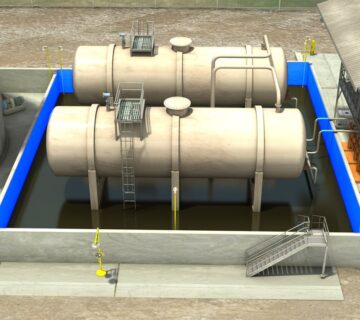
These barriers aren’t just floating booms used after a spill. Onboard, they take the form of berms, dikes, and modular walls that surround sensitive equipment. When used with polyurea-lined floors or trays, they give crews the time they need to respond before oil escapes into the ocean.
What the Public Sees, Regulators Watch
When oil leaks become viral content, regulators notice. The public expects accountability, but government agencies demand it. Operators can no longer rely on minimal compliance. They need containment systems that prove effective in harsh environments, not just in manuals.
Smart companies are getting ahead of that pressure. They’re investing in integrated oil containment systems that prevent leaks from becoming disasters. These systems reduce cleanup costs, protect marine life, and—maybe most importantly—help companies keep their operations running after the cameras turn off.
Oil Doesn’t Wait. Neither Should Containment.
Leaks don’t happen on a schedule. A flange gives out. A hose splits. A storm surge overwhelms the deck. Without a strong containment strategy, every one of these events can end up on the evening news—or a viral video feed.
Polyurea offers one of the few materials tough enough to handle the real conditions on an oil rig. When applied correctly and supported with the right barriers and monitoring systems, it becomes part of a larger safety net. One that’s built not just for compliance—but for reality.
Operators can’t always stop a leak. But with the right tools, they can stop it from becoming a catastrophe.