





The oil rig industry has always been a pioneer, progressing and being driven by the challenges of operating in environments. Looking ahead, new technologies are poised to change how oil rigs operate, improving safety, efficiency, and environmental awareness. Exploring these emerging technologies offers insight into how the industry is gearing up to meet demands.
Automation stands out as an area of innovation. Future oil rigs will likely feature processes that reduce reliance on manual labor and minimize errors. Automated drilling systems can operate by adjusting to real-time data for performance. These systems can monitor pressure and temperature, adjusting to maintain ideal drilling conditions. By decreasing the need for involvement, automation boosts safety and efficiency on the rig.

Another exciting advancement lies in intelligence (AI). AI has the potential to transform how data is utilized on oil rigs. With the amount of data generated during drilling operations, AI can analyze this information instantly, recognizing patterns and predicting outcomes.
For example, AI can predict equipment malfunctions in advance, enabling maintenance to decrease downtime and avoid interruptions. Moreover, AI-powered systems can enhance drilling routes, boosting the effectiveness of resource extraction while minimizing harm to the environment.
Furthermore, robotics is set to play a role in the future of oil platforms. Progress in robotics is facilitating the creation of vehicles (AUVs) and remotely operated vehicles (ROVs) capable of performing tasks in hazardous or inaccessible areas. These robots can. Repair structures, monitor pipeline integrity, and even conduct drilling operations in deep-sea locations. The utilization of robotics does not improve safety. It also broadens the capabilities of oil rigs, enabling them to function in more demanding and remote settings.
The adoption of twins represents another cutting-edge innovation poised to revolutionize oil platform operations. A digital twin serves as a replica of an asset, like a drilling platform that accurately replicates real-time conditions. Simulating scenarios, digital twins empower operators to test and refine processes before implementing them on the rig. This technology serves as a tool for enhancing decision-making processes, mitigating risks, and optimizing operational efficiency.
In addition, digital twins can be utilized for maintenance by simulating the impact of wear and tear on equipment, enabling preemptive maintenance scheduling.
Looking ahead in oil rig technology, advancements in materials science play a role. Introducing materials that’re stronger, lighter and more resistant to corrosion will enhance the sturdiness and longevity of oil rig infrastructure. For instance, substituting metals with composites can lighten components while boosting their strength and resistance to environmental elements. These innovative materials are especially valuable when saltwater corrosion and continuous movement can swiftly deteriorate materials.
Furthermore, integrating energy sources like wind, solar, and wave power into oil rig operations is an emerging aspect of thinking oil rig technology. As the industry shifts towards sustainability practices these renewable sources can offer power to rigs reducing their dependence on fuels and decreasing their carbon footprint. This transition not supports initiatives against climate change but also fortifies the resilience of oil rig operations by diversifying their energy supply.
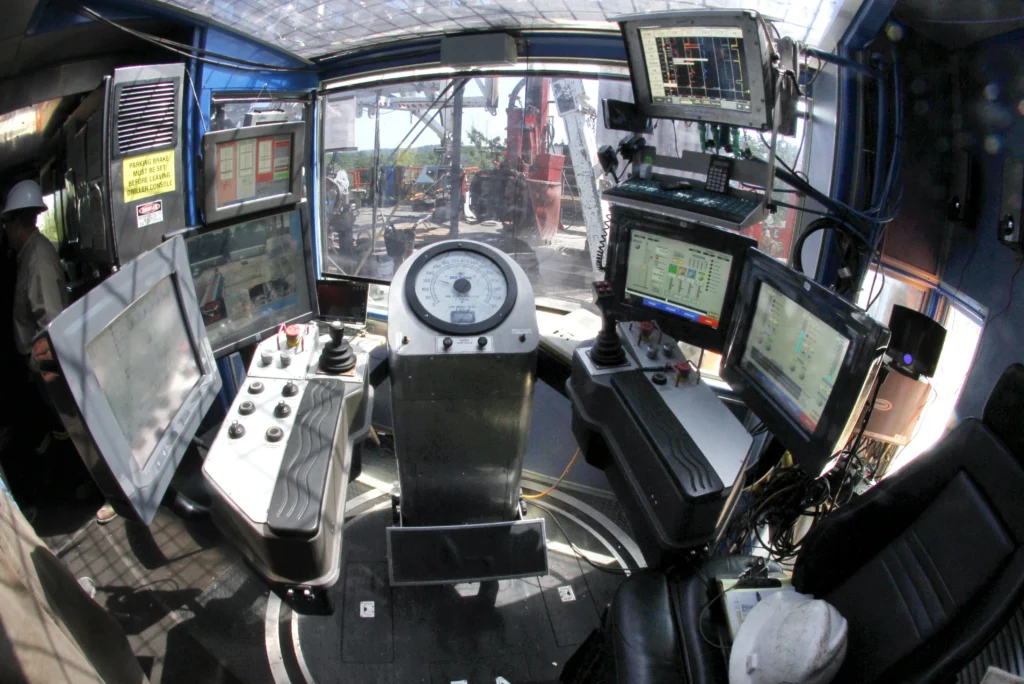
Moreover, future developments in oil rig technology are expected to prioritize enhancements in safety protocols.The increasing complexity of oil rig operations has highlighted the need, for safety systems. Innovations like technology that monitors workers health and the environment can promptly alert operators to dangers. Furthermore, the integration of AI and robotics in fire suppression systems and emergency response protocols will enhance the safety measures for oil rig workers.
In terms of conservation, future oil rigs will implement sophisticated waste management and emission control systems. Technologies designed to capture and store carbon emissions will significantly contribute to minimizing drilling activities environmental impact. Improved spill detection and response mechanisms will be pivotal in reducing the likelihood of disasters. These advancements are crucial for ensuring compliance with regulations while sustaining operational efficiency and profitability.

The future oil rigs will also witness connectivity enhancements. Progress in satellite and communication technologies will enable more reliable data transmission between rigs and onshore command centers. This heightened connectivity fosters improved coordination, real-time decision-making, and remote monitoring capabilities during operations. Consequently, oil rigs are poised to integrate into networks, paving the way for smoother operations with enhanced efficiency.
In summary the upcoming developments, in oil rig technology hold promise for improving safety, efficiency and sustainability within the industry. With advancements like automation, artificial intelligence, robotics and digital replicas on the horizon oil rigs are poised to undergo changes, in their operations. These innovations will enable oil rigs to tackle challenges by enhancing resource extraction efficiency, environmental protection measures and workforce safety protocols. Ultimately these evolving technologies will equip the oil rig sector to adapt to a changing world while maintaining resilience and success.